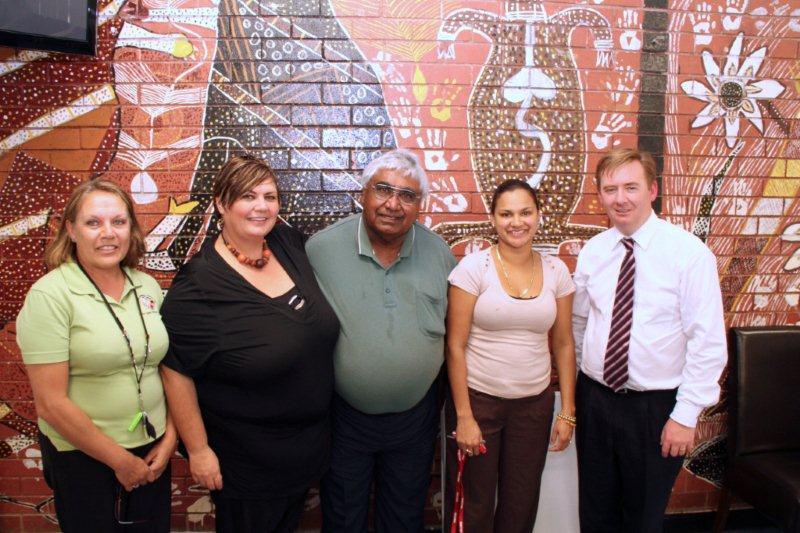
There are many reasons I love my work. One of the reasons is that it is impossible to be bored! We see a whole range of people who believe they have or might have a problem and want to discuss it. Sometimes, that might be a significant medical emergency. Sometimes it might be a significant chronic disease. Sometimes it might be a significant mental illness, or a self limiting condition, or a request for information or support to get housing. Sometimes it might be loneliness. Often these occur together in the same person. This list could be endless - the only limit is the world population and imagination. And there is almost nothing where we can say "That's not our business."
So how do you teach that? In essence, we need a safe approach for anything that can come through the door. And that means there is no learning off limits, nothing we can learn that can have no application. But we can't know everything.
I thought it might be interesting just to post the variety of topics that Michael and I covered in one day, Admittedly it was a day where we had more chance to chat than usual. But the range covered would not be unusual. I'll describe what we did, and reflect a bit on why this might be relevant to General Practice. (Some of the info might be a bit vague - I don't want to run the risk of any patients being identified! Confidentiality is a cornerstone of our work!)
As you'd expect, we do talk about medical conditions and treatments.
COPD and inhalers
A quick discussion in the corridor on the use of Salmeterol/Fluticasone combination (you all know it by another name: "The Purple Inhaler!") in COPD. The evidence shows that people are more likely to have a serious pneumonia on a steroid inhaler. The long acting beta agonist is probably helpful, but we should be cautious about the combination. This wasn't the information we were often taught about this combination, and we have both felt a bit duped by drug companies!
A Rash!
There probably isn't a day in General Practice where you can't use a rash as a teaching opportunity. We're usually taught rashes as if pattern recognition is the only game in town, but it's always always always worth sitting on your hands before looking at the rash and taking a history. It's true for any set of symptoms, and it's true for rashes. And diagnosis isn't the only game in town. You need to be able to form a management plan acceptable to the patient (or their parents) and explain it and understand and alleviate any particular concerns.
Rare Diseases
Every GP has a few people they know well with a rare disease. The care of a patient with a rare disease can't really be discussed online, because the person is all too readily identifiable. As GPs we are so unlikely to see any one particular rare disease, so we don't usually know about them until we see them. But as GPs, we also know that these are people, and the diagnosis of a rare condition isn't what defines them as person - though it often has huge impact. We thought about whether the symptoms my patient had might be related to their rare condition, or whether they might be something else more common, perhaps unrelated. After all, people with rare diseases need the rest of their medical care, too, including preventive care. And I had one of those frisoons of pleasure as Michael quoted back at me the paper I'd co-written. (I think he knew this!) (I'm biased, but I think it's worth a read - it sets out the common problems faced by people with a rare disease, and also an approach GPs might take)
Childhood Obesity
Michael and I have discussed the problem of obesity and food security quite often (and I have drawn on these thoughts blogging here and here) and we have shared Michael Pollan's books which take a cultural view of healthy food, rather than a nutritional approach. On Tuesday, we listened to this podcast from Freakonomics, which highlighted discussions from a range of experts across different fields. It was interesting to see the personal responsibility versus social policy play out again, as well as a search for technical solutions. If you're thinking aboout setting up a tapeworm company, there might well be an opening for you...
Over to you
The day finished with me (Tim) learning 2 things. I learnt what Takotsubo syndrome was. And I learnt that I was the only person in the world who'd never heard of it before!
We'd love to hear your thoughts on these topics - either using the #supertwision hashtag or in the comments below. What's the range of things you cover? What's the strangest resource you've used?
Personal reflections, comment, discussion by and for doctors working in Aboriginal Medical Services or those who want to understand their work better.
Saturday, May 25, 2013
Monday, April 22, 2013
What does a registrar bring to a practice?
So would been quite a while since I had the
opportunity to make a supertwision post.
My last post had foreshadowed a discussion
about what I bring to the practice. Tharawal has been a hive of activity since
I last posted and mainly in relation to three topics:
1.While Tharawal is
particularly good at looking after chronic disease patients all too often that
care is fragmented and we do not access the appropriate funded models of care.
One of the things that I have been working on is about making chronic disease a
simpler entity to manage within our practice. This means utilising a number of
the indigenous chronic disease item numbers more effectively and also returning
chronic disease to being a multidisciplinary care because at the moment's much
of it is done in isolation with individual practitioners; nursing, allied
health and medical all taking on separate responsibilities.
While this isn't a definitively clinical action
for a new registrar it certainly is something that I'm interested in my past
experience with health systems and also with health policy. The work is taking a
couple of days to streamline our approach accessing appropriate item numbers
and educating our practice as to how to co-ordinate care.
I was lucky enough to sit down with the Menzies
School of Health Research and go through their analysis of the Indigenous
Chronic Disease Package over the last two years. Campbelltown was a sentinel
site for the evaluation of the project and so there has been quantitative and
qualitative review of the implementation and uptake. Better chronic disease
management starts with evidence.
Over the last few weeks, I have been working
with our nursing staff and allied health providers as well as setting up
specialist pathways to ensure that team care arrangements and chronic disease
management plans.
One of the highlight programs at Tharawal is
Djurali, which focuses on exercise and nutrition, using both practical and
behavioural change approaches. This kind of long-term intervention is exactly
what GPs often do not do well. The acute needs of patients are what take the
majority of our time. This model of presenting to the doctor is also how we
have educated our patients and means we are always treating illness rather than
promoting better health.
For much of the new work that I'm looking at
I'm trying to take a step back and take the advice of the experts in chronic
disease: our nurses, Aboriginal health workers and allied health staff. From
that we can look at where we each member of a multi-disciplinary team can best
‘value-add’ to the process and optimize our scarcest resource: time. Over the
next few months it is my plan to develop a business case for a chronic disease
nurse to manage a better system of regular proactive appointments with our
chronic disease patients. What we are seeking is more active engagement with
patients on their terms, where we try to recognise, understand and overcome the
barriers to good chronic disease management.
2.My second project
has also been in the space of chronic disease management. Our greatest weapon
in fighting chronic disease is knowledge and data. Learning about our computer
systems at Tharawal it is apparent, especially in discussion with Tim, that at
times this system hampers us from correctly identifying patients for
interventions. One of the very small projects I have taken on is to place a
single clinical item descriptor that is common to everyone with any chronic
disease in our system. This means that finding those patients with chronic
disease is significantly simpler for secondary prevention interventions. While
it is a small thing, making sure that individuals do not fall through the
cracks when it comes to being recognised as someone with a chronic disease is
exceptionally important.
3.The final area I
have been working in is a much smaller, time-limited projects which is to show how
larger-scale interaction with our community works. As part of the influenza
vaccination programme for 2013 I asked that we identify all patients in our
practice over the age of 55 as a group, to proactively target those who should
be receiving the flu vaccine.
My plans are for a single afternoon of
vaccinations with a number of staff members supporting the activity. It is
turning out to take a little bit longer than I thought it would. Both reaching
and convincing patients to come into the practice for this vaccination campaign
would not have been possible without one of our aboriginal health workers, who
is incredibly respected within the community. The vaccination afternoon is coming
up quickly and we’ll share how it goes and that which does and doesn’t work on
the blog soon.
It is becoming apparent that more than anything
else I bring some more energy, an extra set of hands and importantly a new set
of eyes. Taking on new projects or recognising that business as usual is good
but could be improved is one of the greatest reasons to have a registrar in
your practice. The inputs of supervisor’s time are a small investment to create
long-term gains.
I wrote recently for Medical Observer regarding
the matchmaking by registrars applying to general practices. It is all about fit
and determining what you bring to the practice, if there are other registrars
who are reading this blog remember that what you bring is often new perspective
on old problems.
In other news, we are soon to be joined by Kate Bowman @kate_bowman,
a medical student from Manchester in the United Kingdom who will be working
with us for four weeks as part of an overseas elective. We are delighted to
have her on board and look forward to her perspective.
Tuesday, March 26, 2013
An invitation to cultural-X
It's impossible to work in Aboriginal and Torres Strait Islander health without realising the need for cultural awareness, cultural safety or cultural competence. So good on my colleague David Chessor for posing this tweet as a challenge to this blog.
In teaching appropriate work across cultures its important not just to describe the approaches required, but to role model them, to perform them. What better opportunity does social media provide than to do this. I don't want to write this blog post. I want as many Aboriginal and Torres Strait Islander people as possible to tell me and other doctors how we should do it. There's a big movement in medical education to make good use of social media, and the absence of Aboriginal and Torres Strait Islander Health has been noted in this - this is where we can correct this, and provide practical advice in a way that is culturally appropriate (I hope!). I want this blog post to be written by you, not just by me with space for comments. (I'll do the work to curate the responses)
There is some evidence that GPs in training don't like the term cultural safety. For this reason I wonder about acknowledging the work of @IndigenousX for Indigenous Excellence. What we are trying to achieve is Cultural Excellence, so why not Cultural-X?
So - how do you want your doctor (and other health professionals) to behave? How do you know if they've been culturally appropriate? Do you have examples of where you'vee seen it done well and where it's been done badly? If you have experience in health or even if you've ever seen a doctor (or if you've never seen a doctor because we've been a bit rubbish!) I want to hear from you. We can show how social medfia can be used to improve the health care you receive. It could even influence the doctor who will see you and your family members.
So contact me by twitter (@timsenior) or via the blog or e-mail. Let's see what we can create.
If @timsenior hasn’t already done it, a good blog topic to start with perhaps? - cultural awareness versus cultural safety…You won't be surprised to know I do have thoughts on this, based around my own experience of trying to do this to the best of my ability, and based around listening to the views of my patients. I do not teach cultural awareness or cultural safety or cultural competence, though. I am not Aboriginal or Torres Strait Islander. None of these cultures are mine, I am an outsider with the observations of an outsider. The best I can do is describe the skills I use (and that the literature describes) to work across cultural difference. However, it's not for me to judge whether I succeed - that honour goes to my patients, and they will proudly tell them where I go wrong, and I am grateful to them for that.
— David Chessor (@dchessor) March 25, 2013
In teaching appropriate work across cultures its important not just to describe the approaches required, but to role model them, to perform them. What better opportunity does social media provide than to do this. I don't want to write this blog post. I want as many Aboriginal and Torres Strait Islander people as possible to tell me and other doctors how we should do it. There's a big movement in medical education to make good use of social media, and the absence of Aboriginal and Torres Strait Islander Health has been noted in this - this is where we can correct this, and provide practical advice in a way that is culturally appropriate (I hope!). I want this blog post to be written by you, not just by me with space for comments. (I'll do the work to curate the responses)
There is some evidence that GPs in training don't like the term cultural safety. For this reason I wonder about acknowledging the work of @IndigenousX for Indigenous Excellence. What we are trying to achieve is Cultural Excellence, so why not Cultural-X?
So - how do you want your doctor (and other health professionals) to behave? How do you know if they've been culturally appropriate? Do you have examples of where you'vee seen it done well and where it's been done badly? If you have experience in health or even if you've ever seen a doctor (or if you've never seen a doctor because we've been a bit rubbish!) I want to hear from you. We can show how social medfia can be used to improve the health care you receive. It could even influence the doctor who will see you and your family members.
So contact me by twitter (@timsenior) or via the blog or e-mail. Let's see what we can create.
Thursday, March 21, 2013
Close the Gap or Closing the Gap?
Today is National Close the Gap Day. A few months ago, there I was publicising it on
Twitter, and I got into a conversation with someone critical of the campaign. They said it
“raised money to promote government interference in Aboriginal communities.” I
think the Close the Gap campaign and Closing the Gap were being thought of
interchangeably.
I’ve seen confusion about this, both in social media and in
real life, even among those who are quite involved in working in Aboriginal and
Torres Strait Islander communities. (Alright, that was me. But I’m not the only
one!)
So here is your cut out and keep guide (Warning – print off
before attempting to do any cutting!) to Close the Gap and Closing the Gap.
This is the campaign which started in 2008, responsible for
the National Close the Gap days. It was kickstarted by the Social JusticeReport written by Tom Calma setting out a human rights based approach to
health. A broad coalition of Aboriginal and Torres Strait Islander
organisations and non-indigenous health and social care organisations worked
together to promote and build support for the cause and set out how equity
might be achieved. The Steering Committee is co-chaired by the Social Justice
Commissioner, Mick Gooda, and the co-chair of the National Congress ofAustralias First Peoples, Jody Broun. You probably know Oxfam are involved, as
they have been responsible for the campaigning expertise, but there are many
other organisations involved, such as NACCHO, AIDA, the Healing Foundation, the
AMA, the RACGP, ANTAR, even the NRL. You can see a full list here. Close the
Gap an unprecedented coalition of support across many organisations. To date 185,000 people have pledged their support. You can do so too. (And you won’t
find it asking for a donation, though you can buy some nifty merchandise!) You
could argue that the campaign has been such a success that government used the
same terminology!
This is the name given to a series of government programs
with the aim of achieving indigenous equity. It has set 6 goals, not all of
them health related, and each year at the opening of parliament the government
makes a statement to parliament of progress on the goals. (The Close the Gap
produce a parallel Shadow Report, and it’s worth reading both!) In the health
arena, Closing the Gap is responsible for initiatives like the PracticeIncentives Program, the Closing the Gap PBS Co-payment to make prescriptions
affordable, and measures to promote access to specialist and multidisciplinary
medical care.
Why do I need to know
this?
I’m biased, but I think it’s worth knowing this difference.
The Close the Gap campaign is independent of government and is able to offer
policy advice and criticise policy. As it is led by Aboriginal and Torres
Strait Islander organisations it is able to represent what indigenous
communities around Australia need to improve their health. The Campaign itself
is not just a campaign, but models the ways of working in partnership for which
it advocates. You can confidently support the campaign knowing that you are
supporting Aboriginal and Torres Strait Islander people making decisions for
themselves and taking leadership in health.
That’s not to say that Closing the Gap should not be
supported. Seeing bipartisan support for one of the most important issues
facing Australia today is not to be taken for granted, especially in the
current political climate. There are some undoubtedly good things in the
Closing the Gap measures, and the program certainly talks about working in
partnership with Aboriginal and Torres Strait Islander communities, and I
believe they do genuinely want to do so.
Looked at from an Aboriginal or Torres Strait Islander
person’s perspective, though, government initiatives and commitments need to
work hard to develop trust in communities. For over 200 years now, governments
have been engaged in doing things to Aboriginal people, starting with massacresand missions and continuing with the forced removal of children from theirfamilies, which continued up to 1970. Every day in my clinical work, I am
dealing with the consequences of this right now. It’s easy for non-indigenous
people to think this is all in the past, but right now the Northern Territory
Emergency Response, initially called the Northern Territory Intervention, is
going on. Human Rights legislation had to be suspended to do this, and it is an
action that has been widely criticised by Aboriginal communities across
Australia and the UN Special Rapporteur on Human Rights.(PDF). For Aboriginal people, this is
part of a continuing history of governments doing things to them. It’s worth
noting in passing that this program is now called Closing the Gap in theNorthern Territory.
(Incidentally, for some insight into how policy is
determined by its media coverage, read my Croakey post)
You can see the effect of this history, just by listening to
what Aboriginal people are saying. For example in this paper about the care
provided in Aboriginal Medical Services, there is a poignant exchange between
Aboriginal health workers which speaks volumes about trust.
In this poignant interaction
between a board member (P1) and AHW (P2) both felt there was a hidden agenda to eliminate
AMSs altogether, replacing them with poor quality ‘mainstream’ health care.
P1: They (government community health services) shouldn’t think that they are superior
to the AMS team. That sort of an attitude, they should cut it out.
P2: That attitude will stay around for a long time until the boss of this organisation
says something to them.
P1:They say that we need their services but that doesn’t mean they should come and
tell us to do this, do this, do this… They try to bung low grade services onto us…
If we look a little bit further down the track, say five or ten years, there won’t
be any more AMSs. They will have become mainstream services.
P2: That’s a plan of the minister… low grade services.
The tweep I quoted
at the beginning goes on to say “solutions to aboriginal health must prioritise stopping
govt interference in family & community”
Close the Gap is led
Aboriginal and Torres Strait Islander organisations themselves with links back
into communities across Australia. It has built a broad based coalition of
support and is being listened to by governments. It is not responsible for the
delivery of policy, but is able to set out what needs to be done to achieve
health equity in a generation.
A final word – it is hard to remember, so here’s a handy
mnemonic I made up: To remember the difference between Close the Gap and
Closing the Gap, just think that the ING stands for In Government. Easy.
Now all you need to do is support the Close the Gap Campaign, sign the pledge
and join an event today. It’s a cause that all
Australians can support.
Wednesday, March 20, 2013
Bridges Over Chasms - A student writes...
I was thrilled to hear from my friend, colleague and naked doctor (yes, he tells me he really is naked under all those clothes) Justin Coleman this week. He has been using the #Supertwision conversations with his registrar and medical students. One of his students, Susanna Rossotti, wrote this for us as a result of her attachment at Inala in Brisbane.
I admire her passion. There's a sense in GP registrars and medical students coming through that the current situation is unjust and must be changed. There is never any doubt that it will be, or any doubt that they will be involved in changing it. Like them, I am also very optimistic. It's one of the few issues currently on which we have bipartisan support, a real achievement in the current political climate. Tomorrow there will be a record number of events - close to 1000 - held for National Close the Gap day. The gap in health outcomes is one that will be closed. And that can't come soon enough.
Bridges over Chasms
By Susanna Rossotti, 4th yr med student, Griffith University
One
of my primary motivations for beginning this journey in medicine was to
provide health care to people in disadvantaged communities. I had
heroic visions of working for Medecins sans Frontiers in countries
ravaged by war or natural disasters. Little did I know that there was a
natural disaster still unfolding within the apparent safe confines of
the beautiful sunburnt country that is Australia. This natural disaster
is not of the variety that garners short-lived sensationalism by media,
or any sort of significant mainstream media attention at all. But it is
cataclysmic nonetheless. It is the state of affairs for the first
custodians of Australia. These custodians successfully lived in some of
the harshest conditions and their inherent respect for the land and
their natural environment ensured its pristine preservation until the
arrival of the white fella. While I still have much to learn about what
happened to the indigenous custodians of Australia, I have learnt enough
to feel that their very functional traditional way of life has been
destroyed. Their social fabric, their culture, their sense of self
respect and worth has been severely battered. No human being, regardless
of race, could survive such a battering without crippling emotional
wounds and scars with inevitable sequelae for physical and mental
health.
I
am a white fella and I have struggled for some time to define what it
is that draws me to indigenous health. Today I may finally have arrived
at a definitive answer: I perceive an enormous miscarriage of social
justice which threatens the very survival of one the world’s most
ancient people. On a global level, I want to help them work towards
preservation of their existence in the gene pool. On a local level, I
want to help build bridges over chasms that have opened between
indigenous and non-indigenous Australians. I want to show indigenous
people that I respect and value their heritage. I want to learn more
about who these amazing first custodians are. And I want to take what I
learn back to my non-indigenous friends and colleagues, in the hope that
this will further help to close the gap between indigenous and
non-indigenous Australians.
Friday, March 15, 2013
How to get the most out of a job in indigenous health
It may not surprise you to know that working in Aboriginal health is a really good fit for me. Though I do find it fulfilling and I love the work, I also find it difficult and emotionally draining. Nothing worth doing is easy, though, and there is some research into what makes people stay, and even thrive. One of the pleasures and rejuvenators for me, and I know for many other doctors, is teaching. We have had many very good GP Registrars (doctors doing higher level training for their GP qualification) come through at Tharawal, and as you'll know if you're following this blog, Dr Michael Bonning is our current registrar.
I thought it might be useful to write about, and invite discussion on, getting the most out of an indigenous health attachment.
On the ground
The advice at its simplest can be summed up as "Throw yourself in wholeheartedly!" Michael can't write this (because he's too modest!) but he has managed to do this and then some. Since he started in January, Michael has presented teaching for staff on burns management, for the pre-school on seizures in children. He's restarted the journal club. He's been getting a box of beautiful fruit and vegetables from our community food box program and has been attending Boot Camp. He's been involved in teaching medical students, nursing students and a student physician assistant. As a result of this, he's been invited to meet with the Men's group. It's also worth mentioning that he has been seeing patients, too, and that's because they are comfortable seeing him becuase they've met him outside the consulting room. He's also invited Brian Owler, NSW AMA president to visit, too! He has respect for the nurses, Aboriginal Health Workers, receptionsists, dietician, and all the other non-medical staff. Of course everyone says they have this, but it's from actions that you know - a "high-five" moment with Nikki, one of our nurses as a nasty leg ulcer healed is one of those actions.(Michael is not the first or only registrar who has thrown themselves into many activities in the service, but this is #supertwision and so we get to open up what he does!)
The big picture
There aren't many GPs who work in Aboriginal and Torres Strait Islander Health - 483 in clinical work at the latest count - and so there is a need to ensure future GPs are trained to be able to work well with Aboriginal and Torres Strait Islander people. Some will go on to work in Aboriginal Community Controlled Health Services, but more will become GPs who will see Aboriginal and Torres Strait Islander people as part of their day to day clinical work. This is certainly true in rural areas, but the largest numbers of indigenous people live in urban areas, so this is not exclusively a rural issue.The not-so-secret secret is that if you can do good general practice in an Aboriginal health setting, you can do it anywhere. You can do truly patient centred medicine, you can gain trust with people traditionally underserved by health services. You can engage and listen well to communities. You can consult effectively across cultures. You can handle chronic disease, and particularly complex conditions and co-morbidity. The skills are transferrable to other settings - but only if you are able to immerse yourself in the local community and listen to their wisdom. Which is what makes attachments in Aboriginal health so much fun when you do them. When a community starts to like you as a doctor, they don't let go!
I'd love to hear other people's thoughts and experiences. Post them in the comments below or on Twitter with the #Supertwision hashtag.
Sunday, February 17, 2013
Why are you here and not somewhere else?
This is a piece of installation art by Jeppe Heine, which
lives in the Booth School of Business at the University of Chicago. To me it asks the question of what is important and why does it matter. It
is just the right question to bring together what I’ve been thinking about over
the last week at Tharawal:
- Why am I here?
- Now that I’m here what am I trying to achieve?
- Why do patients come here?
In this post I’ll deal with the first question and then move
on to the others I love going to work – wherever that work might be. Tharawal
like some, but not all, of the places I have worked has a great vibe – that
quality that is difficult to quantify, takes many forms but you know it when
you see it. At Tharawal it stems from individual and community ownership of the
work – this is the reason for Aboriginal Community Controlled Health
Organisations.
And that ownership means services exist that actually
benefit our patients. Trying to find useful services (outside of your own area
of practice expertise) is often one of the banes of trying to deliver good
healthcare. Tharawal is a magnet for great clinicians and members of the
community. That, in turn, engenders a degree of drive amongst the whole team to
deliver better care. The practice
escapes from the notion of individuality and that each person is trying to
achieve something on their own.
And I’m now a part of that team.
The best experiences of my training have been where this
kind of team exists. You can’t quite
know this is going to be the case when you pick a practice. But sometimes there are inklings. Now that I’m
here the concept of ‘fit’ comes into play.
I’m still new to the place but the first steps have been promising.
There are projects with Tim, ideas for improving current programs, outlets for
my own teaching interests and a challenging clinical environment.
So I’ve lucked into a great job and now is the chance for me
(and Tim) to make something of it. This week has involved the first draft of a
conference abstract to both talk about the conception of supertwision and also
to give us an idea of where we are going. Doing that is giving me a better
understanding of what I am trying to achieve while at Tharawal – the subject of
the next post.
Subscribe to:
Posts (Atom)